
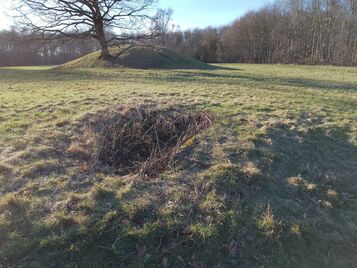
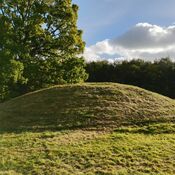
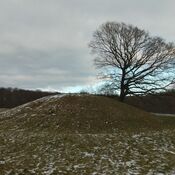
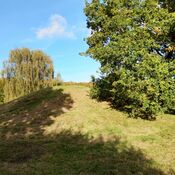
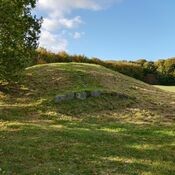
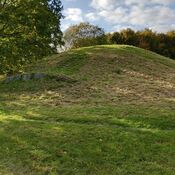
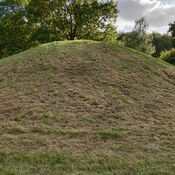
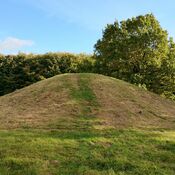
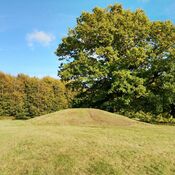
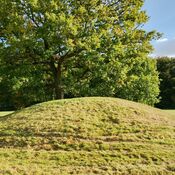
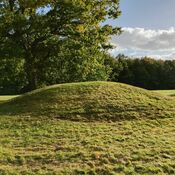
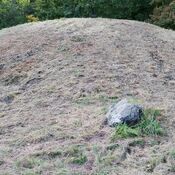
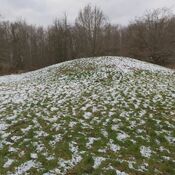
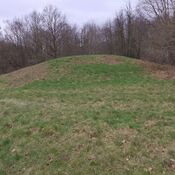
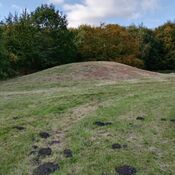
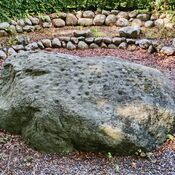
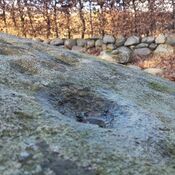
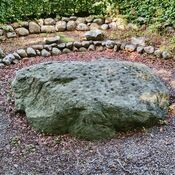
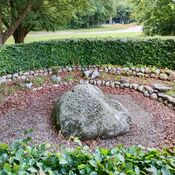
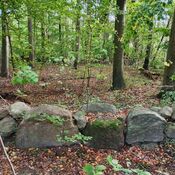
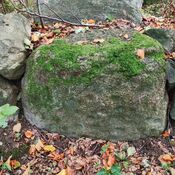
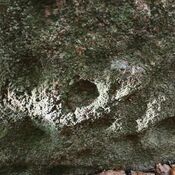
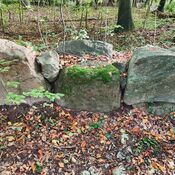
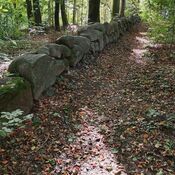
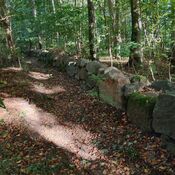
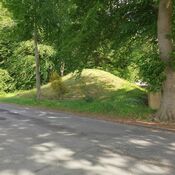
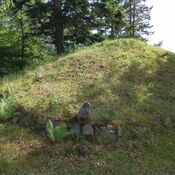
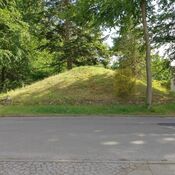
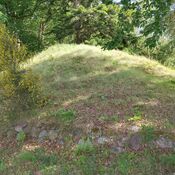

The stone cist (stenkiste, hellekiste) is located in Gamle Hestehave (Old Horsegarden) east of Svendborg, Denmark, among several large and smaller burial mounds. It is situated between two of the larger mounds.
The cist dates from the end of the Stone Age. It is categorized as Late Neolithic, corresponding to the »Dagger time« (2400–2800 BC), or more specifically, 2400–1800 BCE. Archaeological dating places it roughly between 2350 and 1700 B.C..
The stone cist was discovered and excavated in 1934 following an announcement from the plantation owner, J.H. Weber, that a burial chamber had been found during work in a fruit plantation.
The cist itself was uncovered in a nearly vanished mound; the mound that once covered the grave has now disappeared.
The cist was a late Neolithic stone cist (hellekiste). It was approximately 2.2 x 1.6 m (or 2.5 x 1.3 m according to a 1983 description).
It was carefully constructed of large flat stones. The eastern long side, for instance, consisted of a single very long flat stone.
The cist was oriented NNV-SSØ (or NV/SØ in 1983) and was defined at the south end by two low threshold stones. It was noted that the cist lacked capstones (dæksten).
The grave chamber contained the remains of skeletons from many funerals, specifically the remains of at least four skeletons. Excavators noted that older burials had been cleared aside to accommodate the last interred individual.
Grave goods found in the cist included: Two flint daggers (flintdolke), and a small pendant of slate (skiferhængesmykke). This pendant was found later in the soil piles left over from the 1934 excavation.
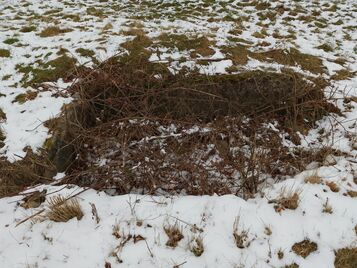
The site is a protected monument, having been officially protected in 1937 or later. However, the stone cist is now largely obscured. Multiple surveys have noted that it is completely covered by brambles (brombær), making the stones almost invisible. As recently as 2019, the ancient monument was found as described in previous reports.
https://www.kulturarv.dk/fundogfortidsminder/Lokalitet/9081/