Er zijn nog geen Nederlandstalige annotaties. Hier volgen annotaties in het Engels.
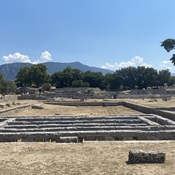
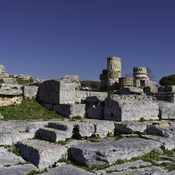
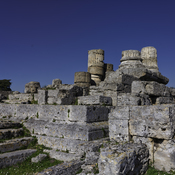
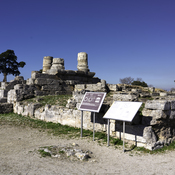
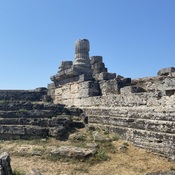
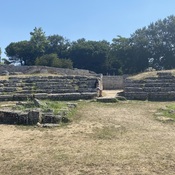
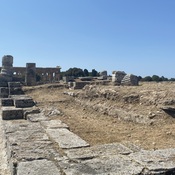
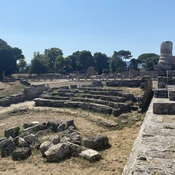
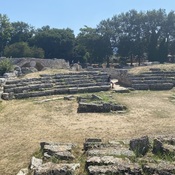
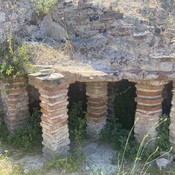
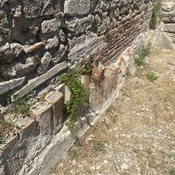
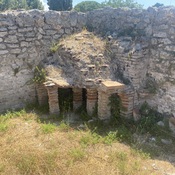
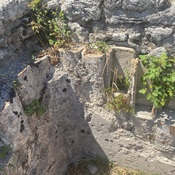
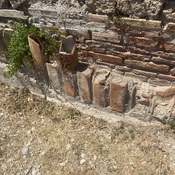
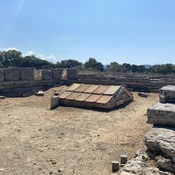
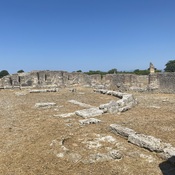
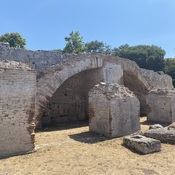
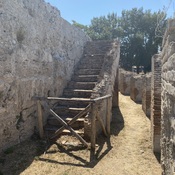
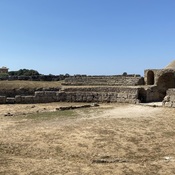
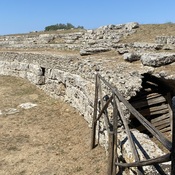
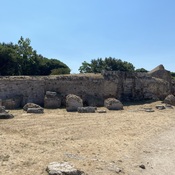
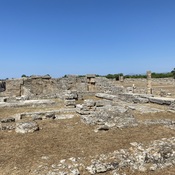
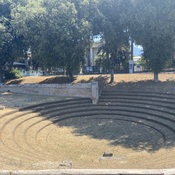
The "Pool" is one of the most unusual monuments of Roman architecture at Paestum. The originality of the large pool is mainly due to the stone structure, placed on one of the short sides and resting on 73 pilasters. It was designed to function as the base of temporary wooden constructions used to perform rituals. The worshipped goddess was Venus Verticordia, "The turner of hearts." Roman women came to her to increase their sensuality and fertility. Every year, in April, the women of Paestum celebrated Veneralia. They carried a wooden statue in a procession and then immersed it in the water to wash it. After being cleaned in the pool, the statue was covered in precious clothes, and her body was decorated with flowers and jewelry. Under the watchful eye of the goddess, the women entered the water: They took off their clothes and bathed repeatedly. There were expert women and young virgins: It was a moment when learning took place, and life experiences were exchanged. Young women are prepared to become brides and mothers. Some women sought relief during labor and hoped for a successful delivery.
According to another hypothesis, the structure was not a pool but a storage area for agricultural produce, a kind of granary. In this case, the pilasters were designed to enable air to circulate beneath the floor to ensure better preservation of the foodstuffs.
The "Pool" is one of the most unusual monuments of Roman architecture at Paestum. The originality of the large pool is mainly due to the stone structure, placed on one of the short sides and resting on 73 pilasters. It was designed to function as the base of temporary wooden constructions used to perform rituals. The worshipped goddess was Venus Verticordia, "The turner of hearts." Roman women came to her to increase their sensuality and fertility. Every year, in April, the women of Paestum celebrated Veneralia. They carried a wooden statue in a procession and then immersed it in the water to wash it. After being cleaned in the pool, the statue was covered in precious clothes, and her body was decorated with flowers and jewelry. Under the watchful eye of the goddess, the women entered the water: They took off their clothes and bathed repeatedly. There were expert women and young virgins: It was a moment when learning took place, and life experiences were exchanged. Young women are prepared to become brides and mothers. Some women sought relief during labor and hoped for a successful delivery.
According to another hypothesis, the structure was not a pool but a storage area for agricultural produce, a kind of granary. In this case, the pilasters were designed to enable air to circulate beneath the floor to ensure better preservation of the foodstuffs.