Il n'y a pas une annotation en français. Présenté est une annotation en Anglais.
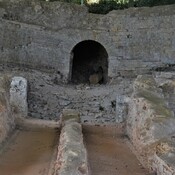
The building was originally built in 380 AD as part of a Roman spa complex. In the 7th century, the structure was converted into a church, becoming the chapel of a Benedictine nunnery. A new nave was constructed in the 11th century with further interior renovations. In the 16th century, the building became a warehouse, and remained so until the 1970s, when it was restored and opened for concerts and exhibitions1.
Références
- ↑wikipedia: Basilica of Saint-Pierre-aux-Nonnains
The building was originally built in 380 AD as part of a Roman spa complex. In the 7th century, the structure was converted into a church, becoming the chapel of a Benedictine nunnery. A new nave was constructed in the 11th century with further interior renovations. In the 16th century, the building became a warehouse, and remained so until the 1970s, when it was restored and opened for concerts and exhibitions1.
Références
- ↑wikipedia: Basilica of Saint-Pierre-aux-Nonnains