Er zijn nog geen Nederlandstalige annotaties. Hier volgen annotaties in het Engels.
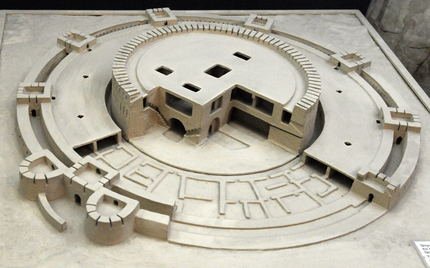
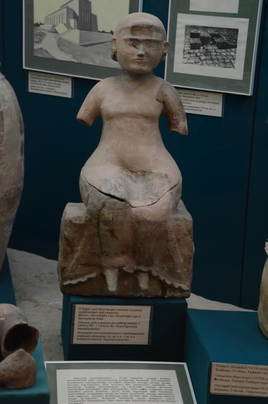
It was not the fortress they had set out to reach. This particular ruin could not be seem from the top of Teshik qala. According to Tolstov, the surprise find was deca-octagonal in shape, having eighteen corners, and its 5 to 6 metre high walls were covered with narrow closely spaced loopholes. It was surrounded by a circular wall reinforced by the ruins of nine towers. The interior was filled with fragments of glazed and richly decorated ceramics and Tolstov found bronze Scythian arrow heads and two terracotta statuettes.
Excavations showed that the building had been destroyed by fire and had later been ransacked. It seems to have originally been built in the 4th century BC shortly after Khorezm gained its independence from Persia. This period, originally named after the Kangyuy culture of the middle Syr Darya and now called the Early Antique Period, saw a huge blossoming of Khorezmian culture.
It is possible that the lower floor might have originally functioned as some type of astronomical observatory, possibly monitoring the times for the rising and setting of certain stars and perhaps the cycles of the sun and the moon, given their highly venerated position in Zoroastrianism. We do know that the Khorezmians were familiar with eclipses, had an accurate calendar and knew the exact time of the seasons – vital for the management of their agricultural economy.
It was not the fortress they had set out to reach. This particular ruin could not be seem from the top of Teshik qala. According to Tolstov, the surprise find was deca-octagonal in shape, having eighteen corners, and its 5 to 6 metre high walls were covered with narrow closely spaced loopholes. It was surrounded by a circular wall reinforced by the ruins of nine towers. The interior was filled with fragments of glazed and richly decorated ceramics and Tolstov found bronze Scythian arrow heads and two terracotta statuettes.
Excavations showed that the building had been destroyed by fire and had later been ransacked. It seems to have originally been built in the 4th century BC shortly after Khorezm gained its independence from Persia. This period, originally named after the Kangyuy culture of the middle Syr Darya and now called the Early Antique Period, saw a huge blossoming of Khorezmian culture.
It is possible that the lower floor might have originally functioned as some type of astronomical observatory, possibly monitoring the times for the rising and setting of certain stars and perhaps the cycles of the sun and the moon, given their highly venerated position in Zoroastrianism. We do know that the Khorezmians were familiar with eclipses, had an accurate calendar and knew the exact time of the seasons – vital for the management of their agricultural economy.