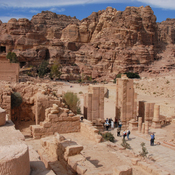
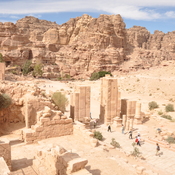
Il n'y a pas une annotation en français. Présenté est une annotation en Anglais.
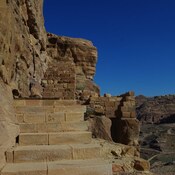
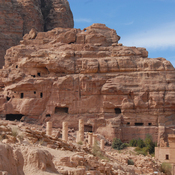
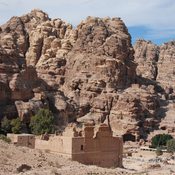
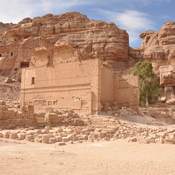
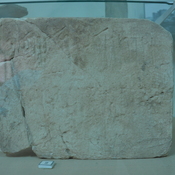
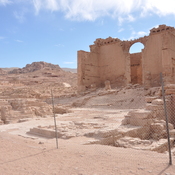
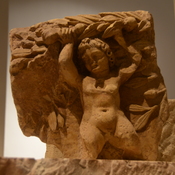
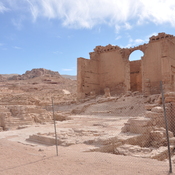
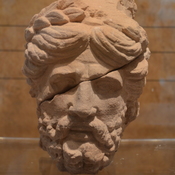
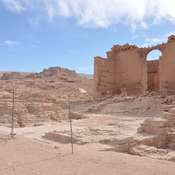
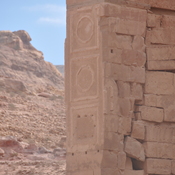
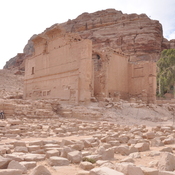
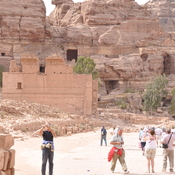
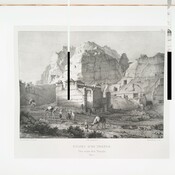
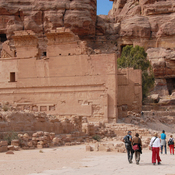
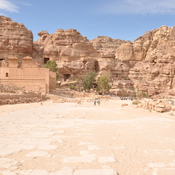
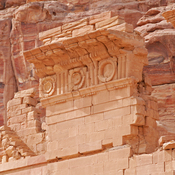
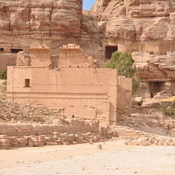
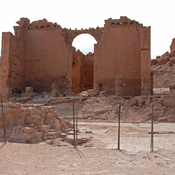
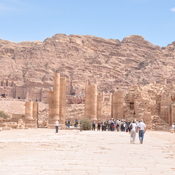
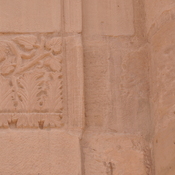
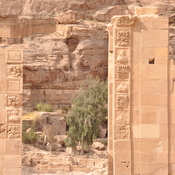
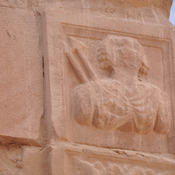
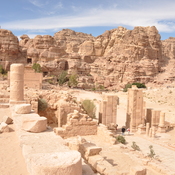
The Tomb of Aaron is the name of the supposed burial place, believed to contain the remains of Aaron, the brother of Moses.
Numbers, 20.21-28
At Edom's refusal to grant Israel passage through his territory, Israel turned away. They set out from Kadesh, and the Israelites, the whole community, came to Mount Hor. Yahweh spoke to Moses and Aaron at Mount Hor, on the frontier of Edom, and said, 'Aaron is to be gathered to his people; he will not enter the country which I have given to the Israelites, since you both disobeyed my order at the Waters of Meribah. Take Aaron and his son Eleazar and bring them up Mount Hor. Then take Aaron's robes off him and dress his son Eleazar in them. Aaron will then be gathered to his people; that is where he will die.' Moses did as Yahweh ordered. With the whole community watching, they went up Mount Hor. Moses took Aaron's robes off him and dressed his son Eleazar in them, and there Aaron died, on the mountain-top. Moses and Eleazar then came back down the mountain. The whole community saw that Aaron had died, and for thirty days the whole House of Israel mourned for Aaron 1 .
Sources:
- Zbigniew T. Fiema, Jaakko Frozen, Petra - the Mountain of Aaron. The Finnish Archaeological Project in Jordan. Vol. I. The Church and the Chapel, Helsinki: Societas Scientiarum Fennica, 2008
- http://www.grandview.com.jo/aarons_tomb.html
- Glen Peterman, Robert Schick,Department of Antiquities of Jordan, The Monastery of Saint Aaron, Annual of the Department of Antiquities of Jordan 40; 1996, pp. 473-480; http://publication.doa.gov.jo/Publications/ViewChapterPublic/1091
Références
- ↑http://www.catholic.org/bible/book.php?id=4&bible_chapter=20
The Tomb of Aaron is the name of the supposed burial place, believed to contain the remains of Aaron, the brother of Moses.
Numbers, 20.21-28
At Edom's refusal to grant Israel passage through his territory, Israel turned away. They set out from Kadesh, and the Israelites, the whole community, came to Mount Hor. Yahweh spoke to Moses and Aaron at Mount Hor, on the frontier of Edom, and said, 'Aaron is to be gathered to his people; he will not enter the country which I have given to the Israelites, since you both disobeyed my order at the Waters of Meribah. Take Aaron and his son Eleazar and bring them up Mount Hor. Then take Aaron's robes off him and dress his son Eleazar in them. Aaron will then be gathered to his people; that is where he will die.' Moses did as Yahweh ordered. With the whole community watching, they went up Mount Hor. Moses took Aaron's robes off him and dressed his son Eleazar in them, and there Aaron died, on the mountain-top. Moses and Eleazar then came back down the mountain. The whole community saw that Aaron had died, and for thirty days the whole House of Israel mourned for Aaron 1 .
Sources:
- Zbigniew T. Fiema, Jaakko Frozen, Petra - the Mountain of Aaron. The Finnish Archaeological Project in Jordan. Vol. I. The Church and the Chapel, Helsinki: Societas Scientiarum Fennica, 2008
- http://www.grandview.com.jo/aarons_tomb.html
- Glen Peterman, Robert Schick,Department of Antiquities of Jordan, The Monastery of Saint Aaron, Annual of the Department of Antiquities of Jordan 40; 1996, pp. 473-480; http://publication.doa.gov.jo/Publications/ViewChapterPublic/1091
Références
- ↑http://www.catholic.org/bible/book.php?id=4&bible_chapter=20