
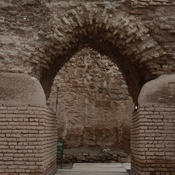
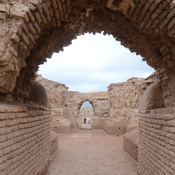
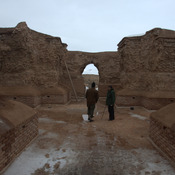
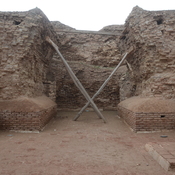
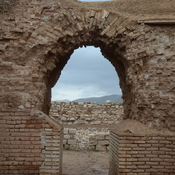
The archaeological site of Takht-e Soleyman, in north-western Iran, is situated in a valley set in a volcanic mountain region. The site includes the principal Zoroastrian sanctuary partly rebuilt in the Ilkhanid (Mongol) period (13th century) as well as a temple of the Sasanian period (6th and 7th centuries) dedicated to Anahita. The site has important symbolic significance. The designs of the fire temple, the palace and the general layout have strongly influenced the development of Islamic architecture.
Lage:
- Iran, Noşratābād
- geo:36.604557,47.234776
- Lage ± 25-100 m.
Period or year:
- -500~ / unknown
Klassification:
- Kastell
- Unsichtbar
Identifiers:
- vici:place=2950
- pleiades:place=884891
- wikidata:entity=Q115253
- omnesviae:id=TPPlace2475
Anmerkungen
Es gibt noch keine deutschsprachige Anmerkungen. Präsentiert wirden Anmerkungen auf English.
The archaeological site of Takht-e Soleyman, in north-western Iran, is situated in a valley set in a volcanic mountain region. The site includes the principal Zoroastrian sanctuary partly rebuilt in the Ilkhanid (Mongol) period (13th century) as well as a temple of the Sasanian period (6th and 7th centuries) dedicated to Anahita. The site has important symbolic significance. The designs of the fire temple, the palace and the general layout have strongly influenced the development of Islamic architecture.
Sasanian sanctuary
In der Nähe
Place of Eternal Fire
Azar Goshnasp Temple
Presumed Mithraic altar


