Il n'y a pas une annotation en français. Présenté est une annotation en Anglais.
In 64 BC following the Roman conquest of the Levant, they annexed the city and called it Ayla and Aelana. Both Petra and Ayla were under Nabatean influence, but despite the Roman rule, the Nabateans continued to prosper. Ayla reached its peak during Roman times, the great long distance road the Via Traiana Nova led south from Bostra through Amman, terminating in Ayla, where it connected with a west road leading to Philistia and Egypt. Around 106 AD Aqaba was one of the main ports for the Romans. It was the home origin of what came to be known as the Ayla-Axum Amphoras. In classical texts the Roman city is known as Ayla, and this is the standard form of the Roman name in scholarly studies.By the time of Eusebius, Ayla became the garrison of the Legio X Fretensis, which was moved to Ayla from Jerusalem. Ayla came under Byzantine Empire rule in 300 AD, where the Aqaba Church was constructed, considered to be the world's very first purpose built church was constructed.The city became a Christian bishopric at an early stage. Its bishop Peter was present at the First Council of Nicaea, the first ecumenical council, in 325. Beryllus was at the Council of Chalcedon in 451, and Paul at the synod called by Patriarch Peter of Jerusalem in 536 against Patriarch Anthimus I of Alexandria, a council attended by bishops of the Late Roman provinces of Palaestina Prima, Palaestina Secunda and Palaestina Tertia, to the last-named of which Ayla belonged.
Source : https://en.wikipedia.org/wiki/Aqaba
In 64 BC following the Roman conquest of the Levant, they annexed the city and called it Ayla and Aelana. Both Petra and Ayla were under Nabatean influence, but despite the Roman rule, the Nabateans continued to prosper. Ayla reached its peak during Roman times, the great long distance road the Via Traiana Nova led south from Bostra through Amman, terminating in Ayla, where it connected with a west road leading to Philistia and Egypt. Around 106 AD Aqaba was one of the main ports for the Romans. It was the home origin of what came to be known as the Ayla-Axum Amphoras. In classical texts the Roman city is known as Ayla, and this is the standard form of the Roman name in scholarly studies.By the time of Eusebius, Ayla became the garrison of the Legio X Fretensis, which was moved to Ayla from Jerusalem. Ayla came under Byzantine Empire rule in 300 AD, where the Aqaba Church was constructed, considered to be the world's very first purpose built church was constructed.The city became a Christian bishopric at an early stage. Its bishop Peter was present at the First Council of Nicaea, the first ecumenical council, in 325. Beryllus was at the Council of Chalcedon in 451, and Paul at the synod called by Patriarch Peter of Jerusalem in 536 against Patriarch Anthimus I of Alexandria, a council attended by bishops of the Late Roman provinces of Palaestina Prima, Palaestina Secunda and Palaestina Tertia, to the last-named of which Ayla belonged.
Source : https://en.wikipedia.org/wiki/Aqaba
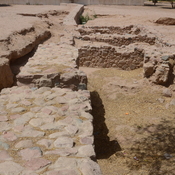
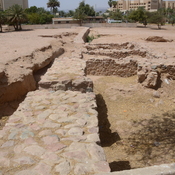
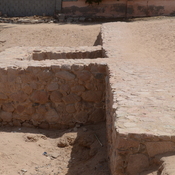
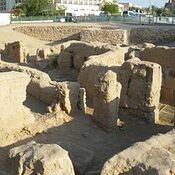
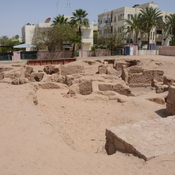
Although this site looks a lot like a Roman fort, the excavator is convinced that it is Umayyad.