
Vici.org

Les environs:

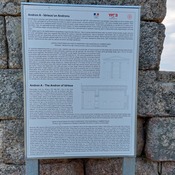
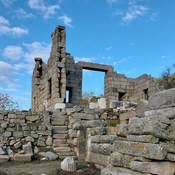
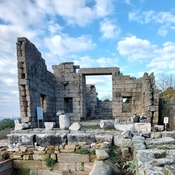
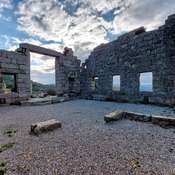
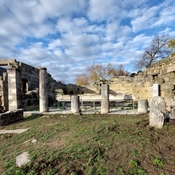
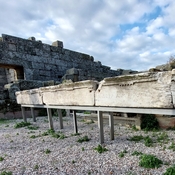
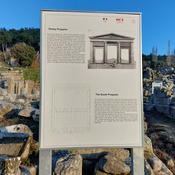
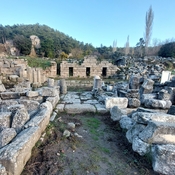
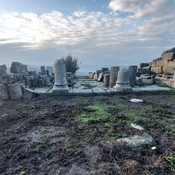
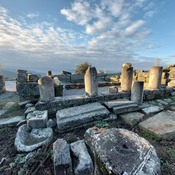
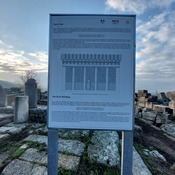
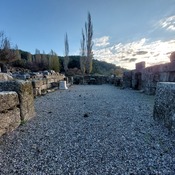
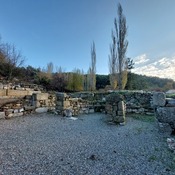
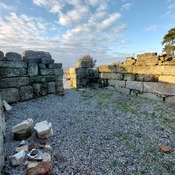
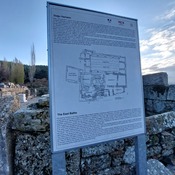
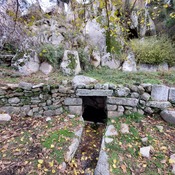
Andron of Mausolus, LabrandaCentral FountainLabraunda, Well-houseANDRON .LAVRANDAAndron A InformationAndron AAndron AAndron A InternalZeus Temple, LabrandaTemple to Zeus InformationTemple to ZeusTemple to ZeusLAVRANDA. MONUMENTAL STAIRWAYLabraunda Monumental Stairway''Oikos L'' & Southern. PropylonTemple Terrace Oikoi InformationTemple Terrace OikoiOikoi InscriptionLabraunda South Propylon InformationSouth Propylon  RemainsLabraunda South Pylon''Doric Building''''Doric Fountain'' InformationLabraunda East ChurchLabraunda East Churchlaconicum or sudatorium  (sweating room)Eastern Baths InformationLabraunda, Spring HouseEast Propylaea RemainsBuilt Tomb Information

Localisation:

  • Turquie, Kışlak
  • geo:37.418507,27.819445
  • Précision ± 0-5 m.

Period or year:

  • -650~ / unknown

Classification:

  • Village
  • Visible

Annotations

Il n'y a pas une annotation en français. Présenté est une annotation en Anglais.

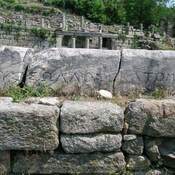
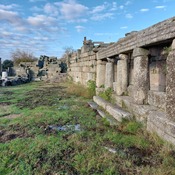
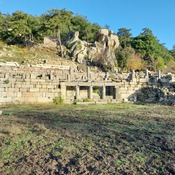
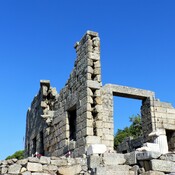
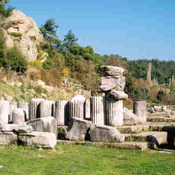
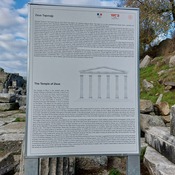
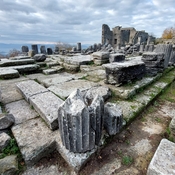
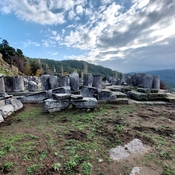
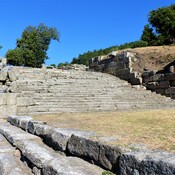
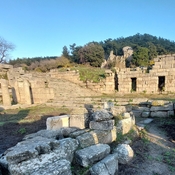
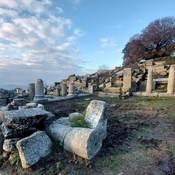
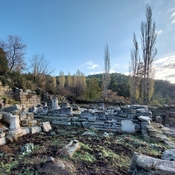
The sanctuary of Zeus Labraundos or Zeust Stratius at Labraunda is strategically located on a peak high up in the Latmos Mountains. According to Herodotus it was a  the precinct of Zeus of Armies at Labraunda 1 ,It played an important role as a refuge place for  the territory of Mylasa, with which It is linked by a 7.5 m wide, paved Sacred Way. It was a major sanctuary of the Carians. The site was occupied already in archaic - mid-seventh century BC. Herodotus speaks of a large and a holy grove of plane-trees 2

The first sanctuary was built in the fifth century BC as a small temple in antis of megaron-like shape.

Sources:

  1. George E. Bean, Turkey Beyond the Maeander. An Archaeological Guide, London Ernest Jersey 1971, pp. 58-68
  2. Ekrem Akurgal, Ancient Civilisations and Ruins of Turkey: From Prehistoric Times until the end of the Roman Empire, Turkish Historical Society Press, Ankara 1970, p. 244-245
  3. http://www.labraunda.org/Labraunda.org/Welcome_to_Labraunda.html
  4. Lars Karlsson; Olivier Henry; Jesper Blid; Ragnar Hedlund, Labraunda 2011. A preliminary report on the Swedish excavations with an appendix by R. Hedlund, Opuscula vol. 5, Uppsala University 2012 - https://www.academia.edu/2212415

Références

  1. Hdt, V.119 - ἐνθεῦτεν δὲ οἱ διαφυγόντες αὐτῶν κατειλήθησαν ἐς Λάβραυνδα ἐς Διὸς στρατίου ἱρόν
  2. Herodotus, The Histories V,119 - http://www.perseus.tufts.edu/hopper/text?doc=Perseus:text:1999.01.0126:book=5:chapter=119&highlight=labraunda

The sanctuary of Zeus Labraundos or Zeust Stratius at Labraunda is strategically located on a peak high up in the Latmos Mountains. According to Herodotus it was a  the precinct of Zeus of Armies at Labraunda 1 ,It played an important role as a refuge place for  the territory of Mylasa, with which It is linked by a 7.5 m wide, paved Sacred Way. It was a major sanctuary of the Carians. The site was occupied already in archaic - mid-seventh century BC. Herodotus speaks of a large and a holy grove of plane-trees 2

The first sanctuary was built in the fifth century BC as a small temple in antis of megaron-like shape.

Sources:

  1. George E. Bean, Turkey Beyond the Maeander. An Archaeological Guide, London Ernest Jersey 1971, pp. 58-68
  2. Ekrem Akurgal, Ancient Civilisations and Ruins of Turkey: From Prehistoric Times until the end of the Roman Empire, Turkish Historical Society Press, Ankara 1970, p. 244-245
  3. http://www.labraunda.org/Labraunda.org/Welcome_to_Labraunda.html
  4. Lars Karlsson; Olivier Henry; Jesper Blid; Ragnar Hedlund, Labraunda 2011. A preliminary report on the Swedish excavations with an appendix by R. Hedlund, Opuscula vol. 5, Uppsala University 2012 - https://www.academia.edu/2212415

Références

  1. Hdt, V.119 - ἐνθεῦτεν δὲ οἱ διαφυγόντες αὐτῶν κατειλήθησαν ἐς Λάβραυνδα ἐς Διὸς στρατίου ἱρόν
  2. Herodotus, The Histories V,119 - http://www.perseus.tufts.edu/hopper/text?doc=Perseus:text:1999.01.0126:book=5:chapter=119&highlight=labraunda


À proximité

Labraunda

Labranda - ancient Carian town.

Labraunda, West Church

West Church Complex of Labranda