


Umgebung:


Lage:
- Türkei, Arifköy
- geo:36.513649,30.057659
- Genaue Lage
Period or year:
- -5xx? / 6xx?
Klassification:
- Stadt
- Sichtbar
Identifiers:
- vici:place=10884
- pleiades:place=638769
- livius:place=arykanda
- wikidata:entity=Q718048
Anmerkungen
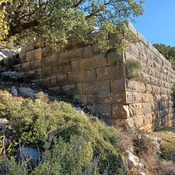
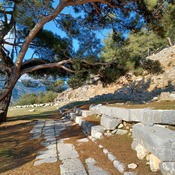
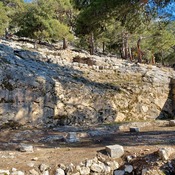
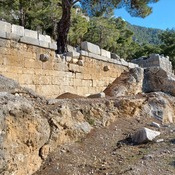
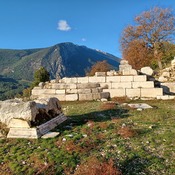
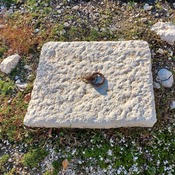
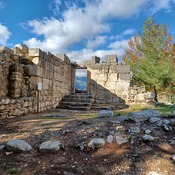
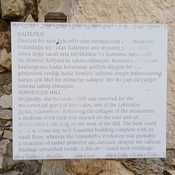
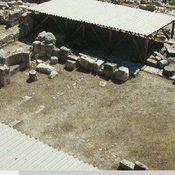
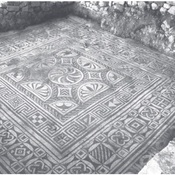
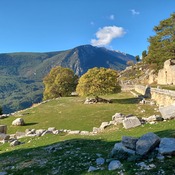
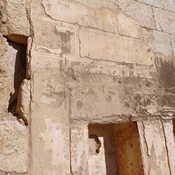
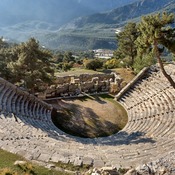
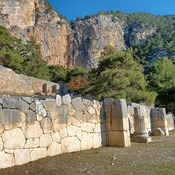
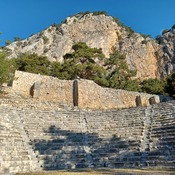
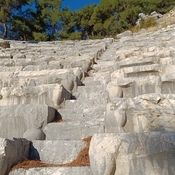
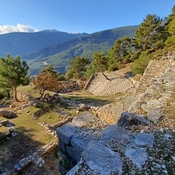
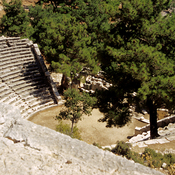
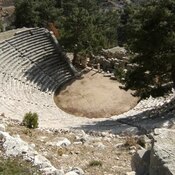
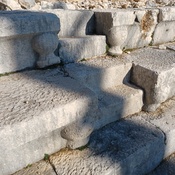
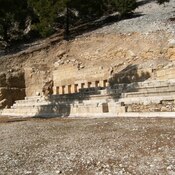
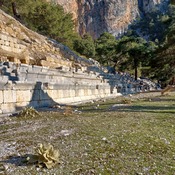
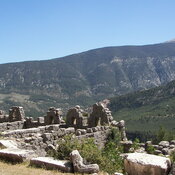
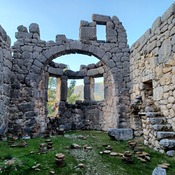
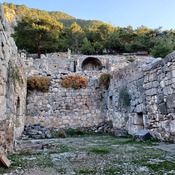
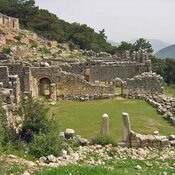
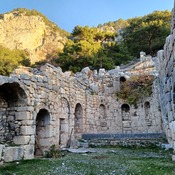
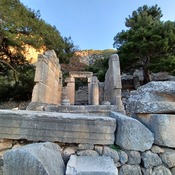
Arykanda is one of the oldest Lycian sites. The city was built on terraces due to the defensible topographical shape of the region. Pliny: In Lycaonia itself the most noted places are Thebasa on Taurus, and Hyde, on the confines of Galatia and Cappadocia. On the [western] side of Lycaonia, and above Pamphylia, come the Milyæ, a people descended from the Thracians; their city is Arycanda1.
Its history goes back to the Chalcolithic period, and the original name of the city “Aru(w)-ak-anda,” means ''place near high rocks" in the Luwian language. The city is located at the foot of the steep cliff called Şahinkaya. Based on stone axe head finds & the suffix 'Anda', it can be said that this city has existed since 2,000 BC. Like the cities of Lycia, Arykanda was under Persian rule in the 5th century. In 333 BC became a part of Alexander the Great Empire and later after his death fell into the hands of his successors. After the Treaty of Apamea in 188 BC was annexed to Rhodes .Arikanda, as a city included in the Lycian League, minted own coins in the 2nd century.
Arycanda survived through Byzantine period, until the VIth century when her inhabitants moved to a new site south of the modern road, which is called Arifkoy. Byzantine town was known as "Akalanda" or "Orykanda"
The trade timber from a nearby forest brought the city's wealth and was at its most prosperous in the Roman period.
Literature:
- Pliny: Natural History V. 25S http://www.perseus.tufts.edu/hopper/text?doc=Perseus%3Atext%3A1999.02.0137%3Abook%3D5%3Achapter%3D25
-
Fellows, C. 1840. An Account of Discoveries of Lycia Being a Journal Kept During a Second Excursion in Asia Minor p. 217 - 227 https://archive.org/details/accountofdiscove00fell
- George E. Bean, Lycian Turkey: An Archaeological Guide. 1989. p.135 - 141
- Arykanda: The Place Near the High Rocks. by Cevdet Bayburtluoglu. 2005
- Lycia. 2004. by Cevdet Bayburtluoglu p. 123 -148
- Lycian Monuments https://www.lycianmonuments.com/arykanda/
- Grokipedia https://grokipedia.com/page/arycanda
Referenzen
In der Nähe
Arykanda commercial agora
Commercial agora. (Hellenistic)
Arykanda Temple to Helios
Small temple to the sun god.
Bouleuterion, Arykanda
Bouleuterion