Er zijn nog geen Nederlandstalige annotaties. Hier volgen annotaties in het Engels.
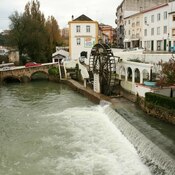
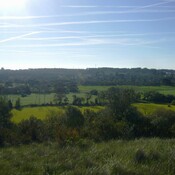
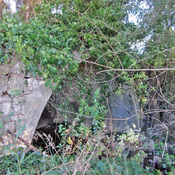
The site of Baralhas or Quinta da Silvã is located very close to the city of Torres Novas, between Lapas and the city limits, a few meters from the Almonda River, in a hillside area with fertile soils.
It was published in the last century in an article by Pedro A. De Azevedo, which references a 1748 news item from the Gazeta de Lisboa, which mentions the identification of "many metal coins with the effigies of Emperors Honorius and Theodosius (...) pipes, which appeared to be from some aqueduct, and many carved stone wedges".
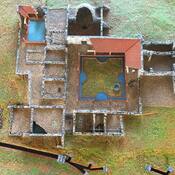
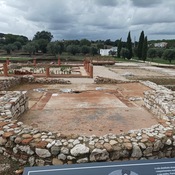
In this publication, the site is referred to as Baralhas. Between 1990 and 1991, the Archaeology Services of the Central Zone, under the responsibility of Artur Corte Real, carried out prospecting and excavation work at the then-named Quinta da Silvã, which resulted in the identification of structures of a possible dwelling and various materials such as common ceramics, glass, coins, and metals.
Traces of polychrome jars and several opus signinum floors were identified. According to Côrte-Real, these remains testify to the rural use of the site during the Roman period, between the end of the 3rd century and the middle of the 4th century.
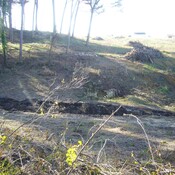
These works were carried out following works to straighten the road connecting Torres Novas to Lapas and works resulting from urbanization in the area. In the works carried out in 2022 by Dr. Adelaide Pinto, it was found that the site remains in the same conditions since the completion of the archaeological works carried out in the 1990s. The urbanization project at the time was changed to preserve the archaeological site.
The site of Baralhas or Quinta da Silvã is located very close to the city of Torres Novas, between Lapas and the city limits, a few meters from the Almonda River, in a hillside area with fertile soils.
It was published in the last century in an article by Pedro A. De Azevedo, which references a 1748 news item from the Gazeta de Lisboa, which mentions the identification of "many metal coins with the effigies of Emperors Honorius and Theodosius (...) pipes, which appeared to be from some aqueduct, and many carved stone wedges".
In this publication, the site is referred to as Baralhas. Between 1990 and 1991, the Archaeology Services of the Central Zone, under the responsibility of Artur Corte Real, carried out prospecting and excavation work at the then-named Quinta da Silvã, which resulted in the identification of structures of a possible dwelling and various materials such as common ceramics, glass, coins, and metals.
Traces of polychrome jars and several opus signinum floors were identified. According to Côrte-Real, these remains testify to the rural use of the site during the Roman period, between the end of the 3rd century and the middle of the 4th century.
These works were carried out following works to straighten the road connecting Torres Novas to Lapas and works resulting from urbanization in the area. In the works carried out in 2022 by Dr. Adelaide Pinto, it was found that the site remains in the same conditions since the completion of the archaeological works carried out in the 1990s. The urbanization project at the time was changed to preserve the archaeological site.