
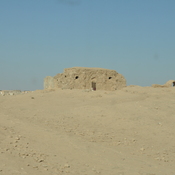
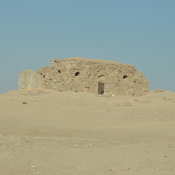
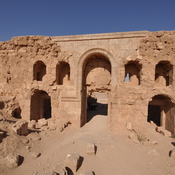
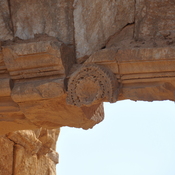
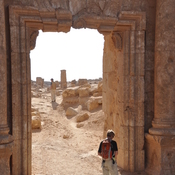
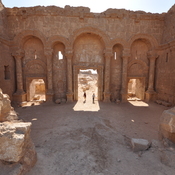
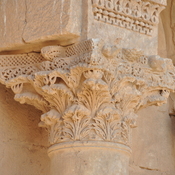
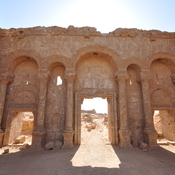
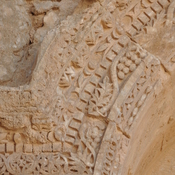
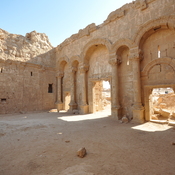
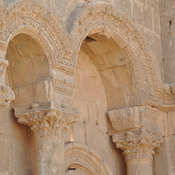
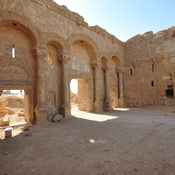
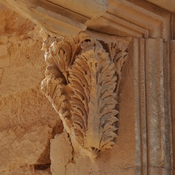
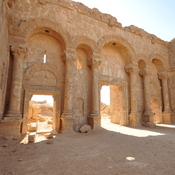
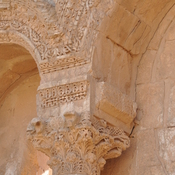
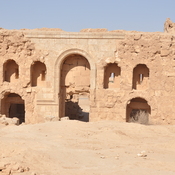
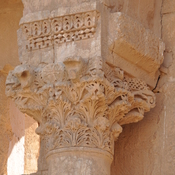
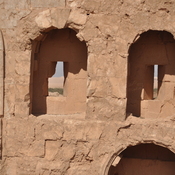
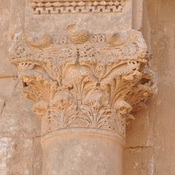
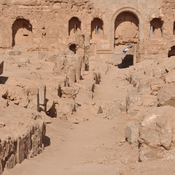
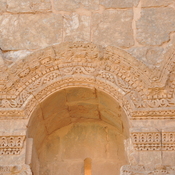
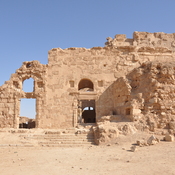
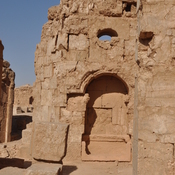
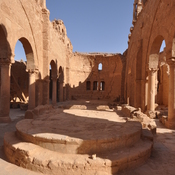
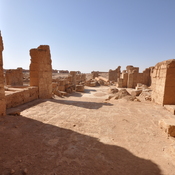
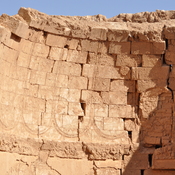
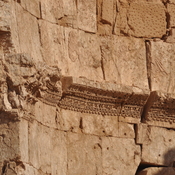
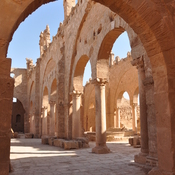
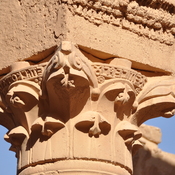

In the 9th century BC Raşappa was an Assyrian military camp. II Kings 19:12; Isaiah 37:12 mentioned as Rezeph1As a place of martyrdom of St. Sergios, the city, which emerged from a Roman Limes fort, developed in the 5th and 6th centuries into one of the most important Christian pilgrimage sites in the eastern Mediterranean. The large public buildings were built in the 5th and 6th centuries. These include four churches as cult buildings: the basilica A near the south gate, the basilica B in the south center, the so-called central building, a bishop's church around 520 AD, and the smaller basilica C at the east gate.
The still existing city walls of the first enclosure, date from the time of Emperor Justinian.
Sources:
- https://www.livius.org/articles/place/resafa
- https://www.hbf-msd.tu-berlin.de/fileadmin/fg200/PUBLIKATIONEN/Resafa-Sonderdruck/RES_MSD-2006-08_33-41_77-81_Impressum-s.pdf
- Walter Karnapp: Die Stadtmauer von Resafa in Syrien. de Gruyter, Berlin 1976- https://doi.org/10.11588/bjb.1965.0.73831
- Elisabeth Key Fowden; The Barbarian Plain: Saint Sergius between Rome and Iran. Berkeley: University of California Press, 1999.
References
- ↑Did the gods of the nations whom my ancestors devastated save them -- Gozan, Haran, Rezeph and the Edenites who were in Tel Basar?