


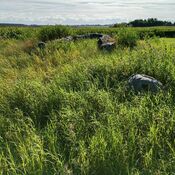
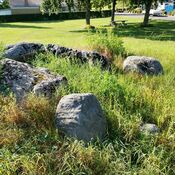
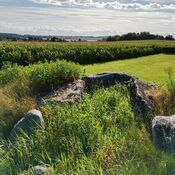
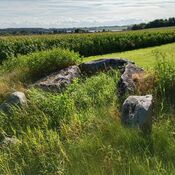
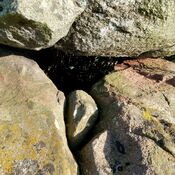
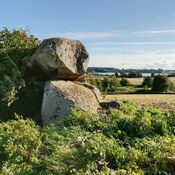
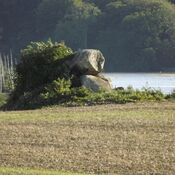
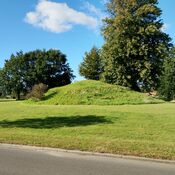
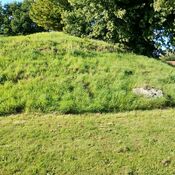
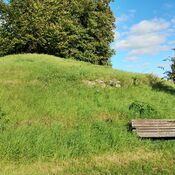
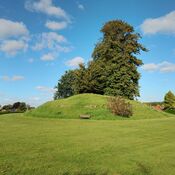
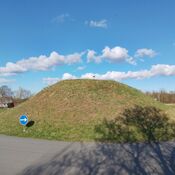
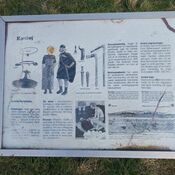
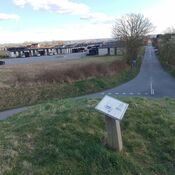
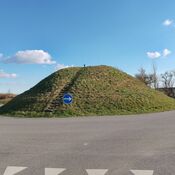
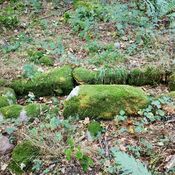
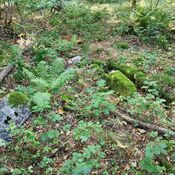
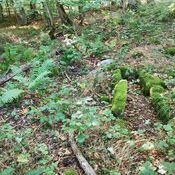
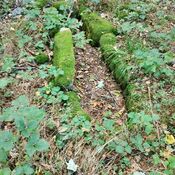
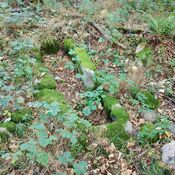
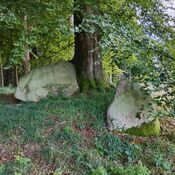
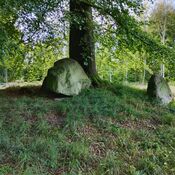
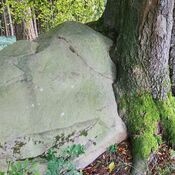
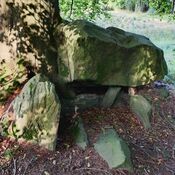
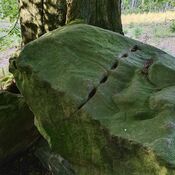

The site is a passage grave (jættestue), also potentially identified as a polygonal dolmen (dysse), located in Vester Skjerninge in the Svendborg municipality.
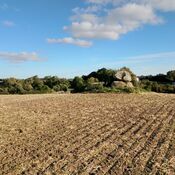
It is situated right next to Lindekildevej in a field. The monument has been protected since before 1937 and is under the responsibility of the museum Arkæologi Sydfyn.
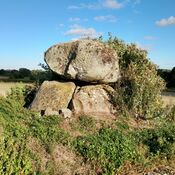
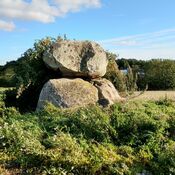
The burial chamber is described as elongated and irregular, oriented southwest-northeast or east-northeast/west-southwest. It consists of seven remaining support stones (bæresten) and one capstone (dæksten). Some of the support stones have collapsed or are leaning.
A 1983 inspection noted that four support stones on the north side had fallen inward, making it difficult to determine the chamber's exact shape, though it was likely a polygonal (pear-shaped) dolmen with an opening to the east.
The interior of the chamber measures 3.8 x 1.5 meters.
An 1885 account described the chamber as oval, 9.5-11.5 feet long and 5-6 feet wide, noting that several support stones and one or two capstones were likely missing
It also mentions that stones from a passage had been removed by a previous owner.
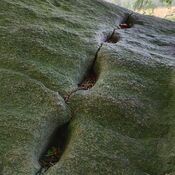
The capstone has cup marks (skåltegn) on its surface, dating to the Bronze Age (1700 - 500 BC). A 1972 inspection observed these marks, and a 1983 report stated the top and southwest edge of the capstone were "completely covered" with at least 60, and likely many more, cup marks. The passage grave or dolmen itself dates to the Stone Age (3950 - 2800 BC).
Several archaeological activities have been recorded at the site, starting with farming/excavation activity in 1874. In 1885, the landowner reported that he had excavated soil both inside and outside the stones. This excavation uncovered many thin, beautifully polished wedges, a hammer, hollow chisels, and two possible grinding stones. Urns and a piece of bronze, possibly from a knife, were also found "inside the stones" but have since been lost.
The site was officially registered for protection on December 4, 1917.
Periodic inspections have been carried out over the years, with the most recent ones mentioned being in 2008, 2016, and 2018.
A 2018 inspection noted that a support stone is leaning and the capstone is in an unstable position. Despite its dilapidated state, the site is described as a beautiful megalithic chamber in a scenic landscape with good access.
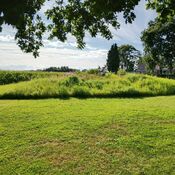
The owner in 1983 had no objection to the path created by visitors walking the 5-6 meters from the road to the monument. As of a visit in September 2025, there was a conservation stone and a bench near the passage grave.
https://www.kulturarv.dk/fundogfortidsminder/Lokalitet/8629/
www.youtube.com/watch?v=YMq0Ai6zkZk